Case studies / Product store
The Old Alaska
Off an expensive platform, with every order landing in the system they already run.
My write up of the build. The Old Alaska lives at theoldalaska.com.au.
Visit theoldalaska.com.au- Where
- Victoria, Australia
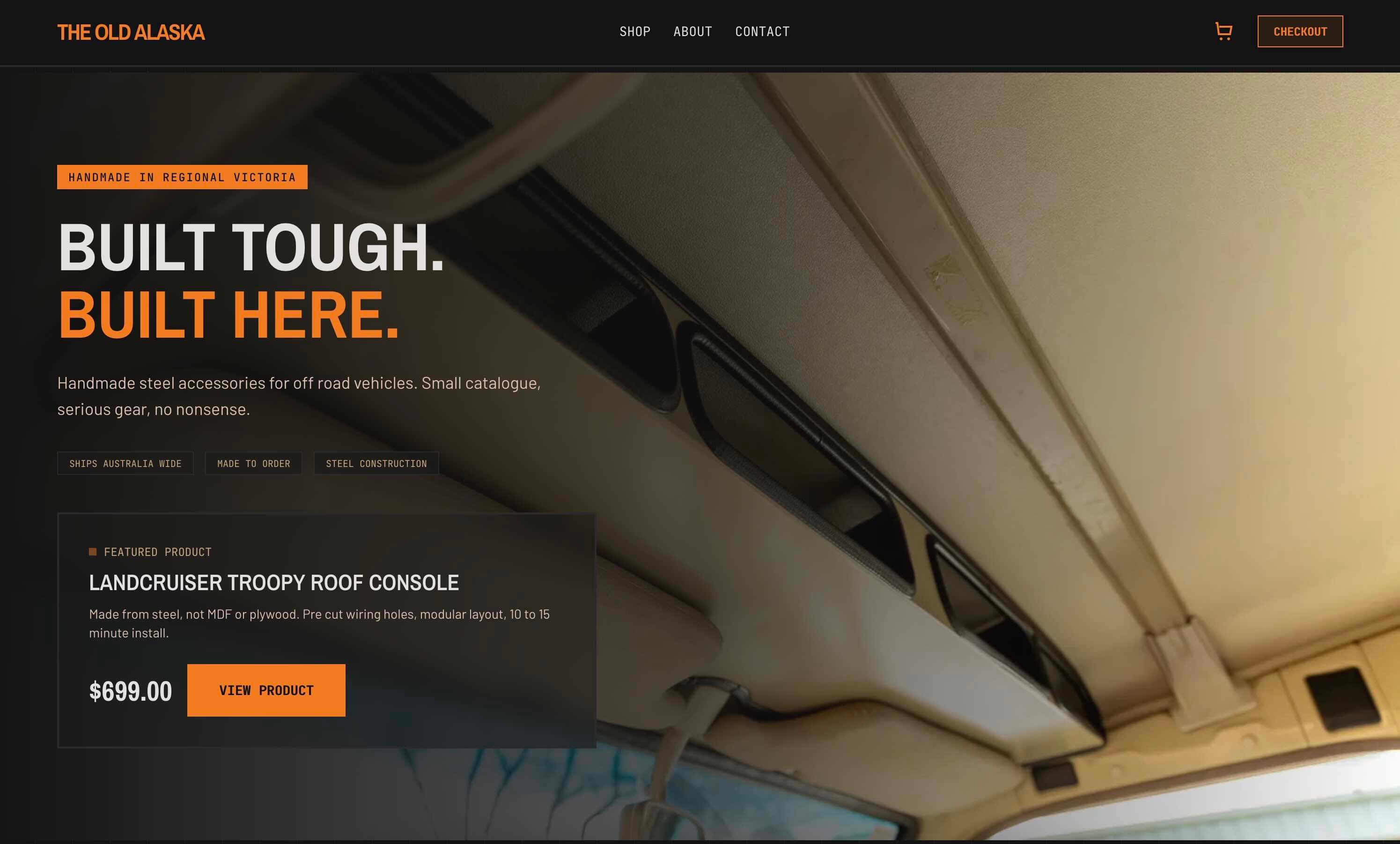
Home page
- 1Featured product, price and CTA sit in the first viewport. No scroll hunt.
- 2Brand first. Tough type, orange mark, copy written for Troopy owners.
- 3Cart and checkout stay one click away from every page.
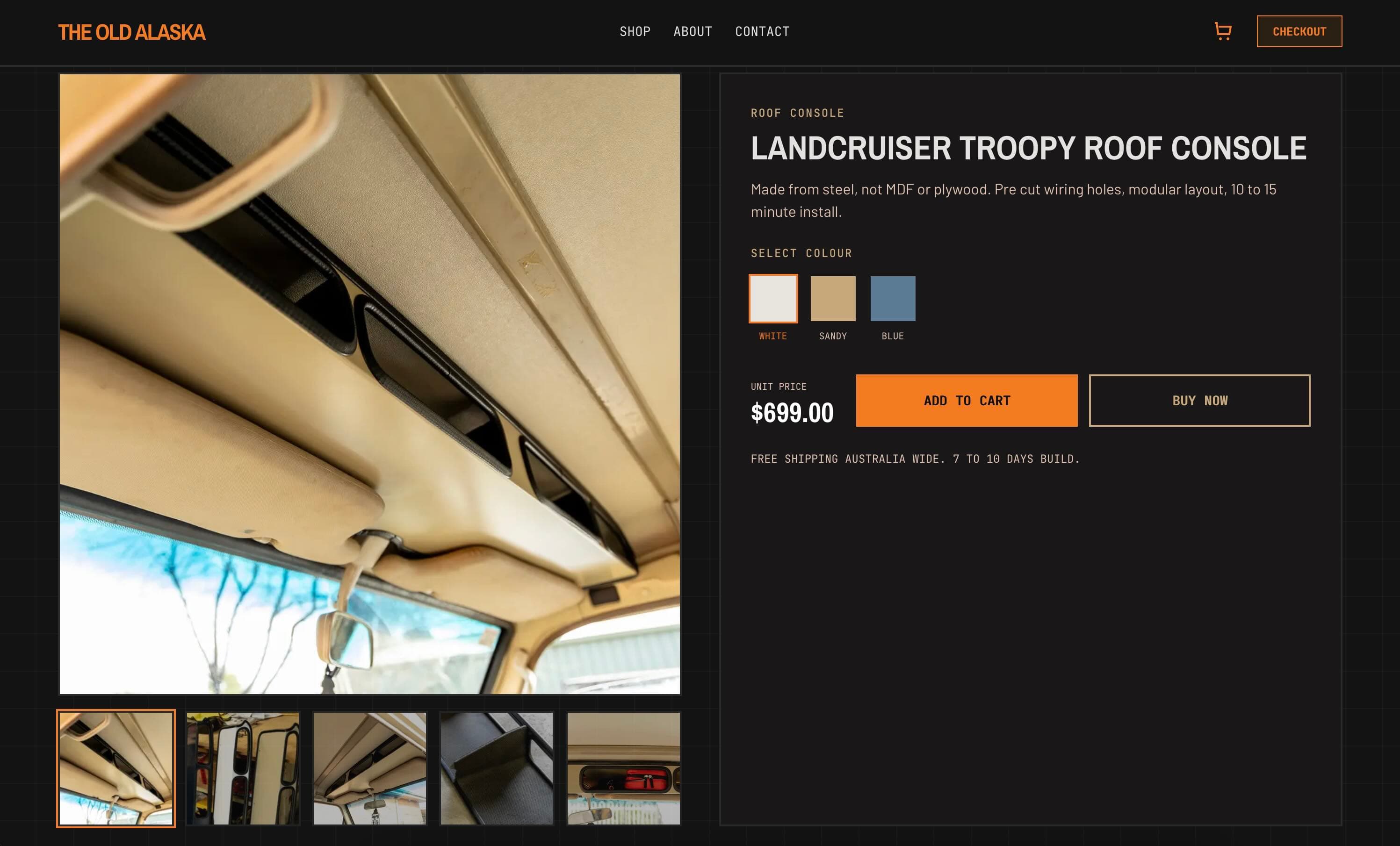
Product page
- 1Colour variants sit next to the price, not buried in a dropdown.
- 2Price sits with add to cart and buy now. Payment happens on this site, not somewhere else.
- 3Free shipping and build time sit under the price before they pay.
The problem
“How do I get off an expensive store platform and stop retyping orders into my own system?”
The Old Alaska was on a store platform that cost real money every month and got harder to leave the longer they stayed. The catalogue, the pages and the customer records all lived inside it.
The worse problem sat on the other side of the sale. Orders arrived on the platform, then had to be typed into the system the business actually runs on. Every order got handled twice, and the second time is where the mistakes happen.
Troopy owners are not browsing for inspiration either. They want the console, the colours, the install and a clean way to pay. A generic theme buries all four.
What I built
I built the storefront from scratch. Dark, industrial, orange marks, copy written for people who already know what a Troopcarrier is.
Products live as plain files in the codebase rather than rows in someone else's database. Each one carries a draft flag, so a finished accessory can sit ready and invisible until there is stock to sell.
Payment happens on the site. Nobody gets bounced onto a differently branded page to hand over a card. Australian shipping is worked out in the quote, and every order gets its own number.
The part that matters most is invisible. An order is written into their own system before payment is attempted, then reconciled automatically once the payment clears. If a customer closes the browser halfway through, the order still exists and someone can chase it. Nothing gets retyped.
Trade pricing runs through the same discount codes as everything else. Wholesale buyers get a code, it applies only to the products it should, and there is no second wholesale portal to maintain.
Where it landed
Orders land once, in the system the business already uses, and the monthly platform bill is gone.
Questions this one answers
Can I move my store off an expensive platform without losing everything?
Yes. The Old Alaska did exactly that. Products, pages and payments all moved across. The part to plan carefully is redirects, so the pages Google already ranks keep working at their new addresses.
Will online orders go into the system I already use?
Usually that is the whole point of building custom. If your system has a way in, I can write orders straight to it. The Old Alaska sends every order across before payment and reconciles it after, so even an abandoned checkout leaves a record you can follow up.
Do my customers get sent to another site to pay?
Not on this build. The card form sits on your own pages, under your own branding. Stripe still handles the card, so the numbers never touch your server, but the customer never leaves.
Can I offer wholesale or trade pricing?
Yes, and it does not need a separate login or a second site. The Old Alaska runs trade pricing through codes that can be limited to particular products. Easy to hand out, easy to switch off.