Case studies / Launch site
The Lost Ones
Four days from PDF mockups to live, in time for a launch event in Brazil.
My write up of the build. The Lost Ones lives at thelostonesmanga.com.
Visit thelostonesmanga.com- Timeline
- Four days, PDF mockups to live
- Where
- Ballarat, Victoria
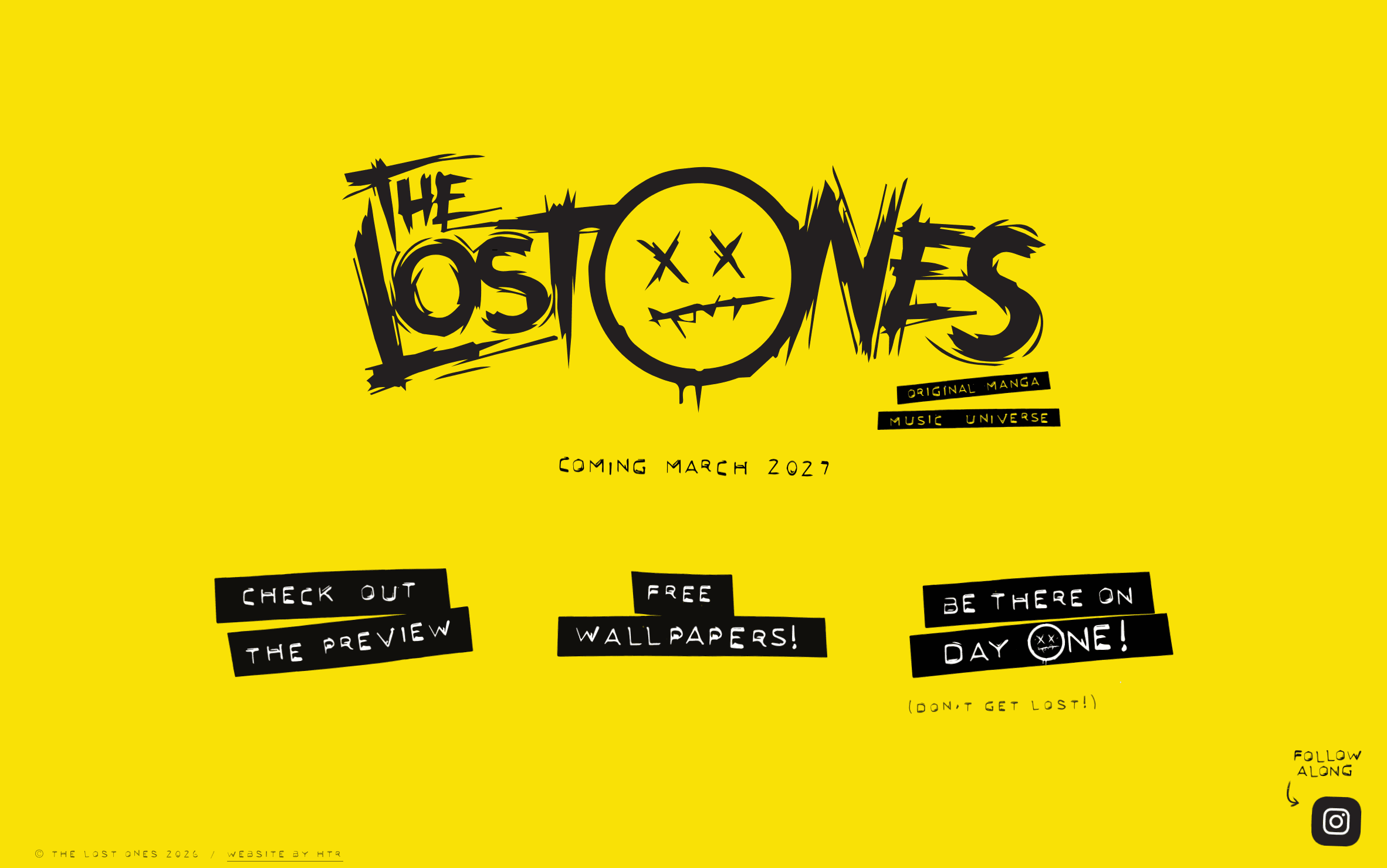
Home page
- 1The author's own hand drawn logo, used as artwork rather than rebuilt in a web font.
- 2The launch date sits under the logo, so nobody has to hunt for it.
- 3Three things to do here: read the preview, take a wallpaper, join the list.
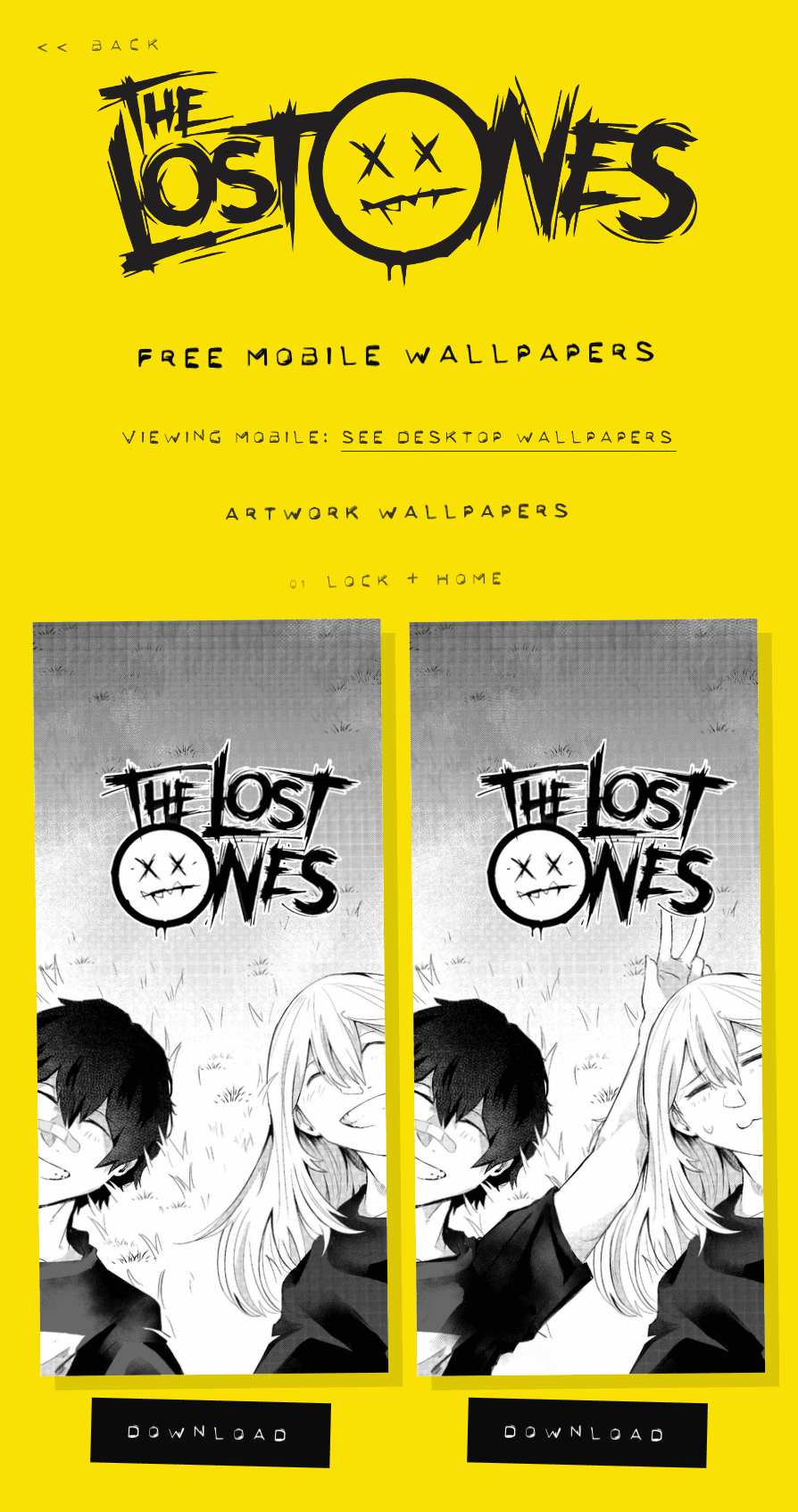
Wallpaper downloads, on a phone
- 1Separate mobile and desktop sets, with a switch between them.
- 2Artwork from the manga, cropped for a phone screen rather than squeezed into one.
- 3No email wall on the downloads. Joining the list is a separate choice.
The problem
“I have a launch date I cannot move and no website yet.”
There was a launch event in Brazil with a date that could not move, and no website. What existed was a set of PDF mockups the author had drawn. No style guide behind them, no component library, just pages.
Two things had to be true on the day. The site had to look like the artwork instead of a template wearing it, and every email address it collected had to still belong to the author years later.
What I built
Four days, start to finish. I worked straight from the PDFs and hand wrote the CSS. No framework, because there was no time to argue with one and nothing on the site needed it.
The preview reader took the longest. Manga reads right to left, so the page turns run backwards from everything a browser expects. Wide screens get two page spreads the way a printed book does, and narrow screens drop to single pages.
Every signup writes to the author's own Postgres database first, then pushes out to the mailing list provider. If that provider goes down, hikes its pricing or locks the account, the list is still sitting in a database the author controls. The push is wrapped so a failure gets logged and the signup still succeeds, because the email is already saved.
The wallpaper gallery gives away artwork with no email wall in front of it. Separate sets for phones and desktops, because a page from a manga does not crop the same way twice.
Where it landed
The site was live for the launch in Brazil, and every email that has come in since sits in a database the author owns.
Questions this one answers
How fast can you actually build a site?
This one took four days from PDF mockups to live. That is the fast end, and it needed a tight scope and quick answers from the client. Most builds run a few weeks. If you have a fixed date, tell me the date first and I will say honestly whether it is possible.
Can you work from mockups or a PDF?
Yes. This entire site came from PDF pages the author drew. I do not need a Figma file, a design system or a style guide handed over. If you have drawings, I can work from drawings.
Who owns my email list if I stop paying the mailing list provider?
You should own it outright, which is why this site saves every signup to its own database before sending it anywhere else. Most sites hand each address straight to a third party and keep no copy, so a suspended account means a lost list. That cannot happen here.
Do I need a content management system for a launch site?
Usually not. This one has none. When the content is fixed until launch, skipping the CMS makes the site faster, cheaper and harder to break into. I will tell you when you actually need one.